
The Chafer Beetle Epidemic in Chilliwack: How to Spot It, Stop It, and Protect Your Lawn Long-Term
By Valley Outdoors
Chilliwack's Local Landscaping Experts
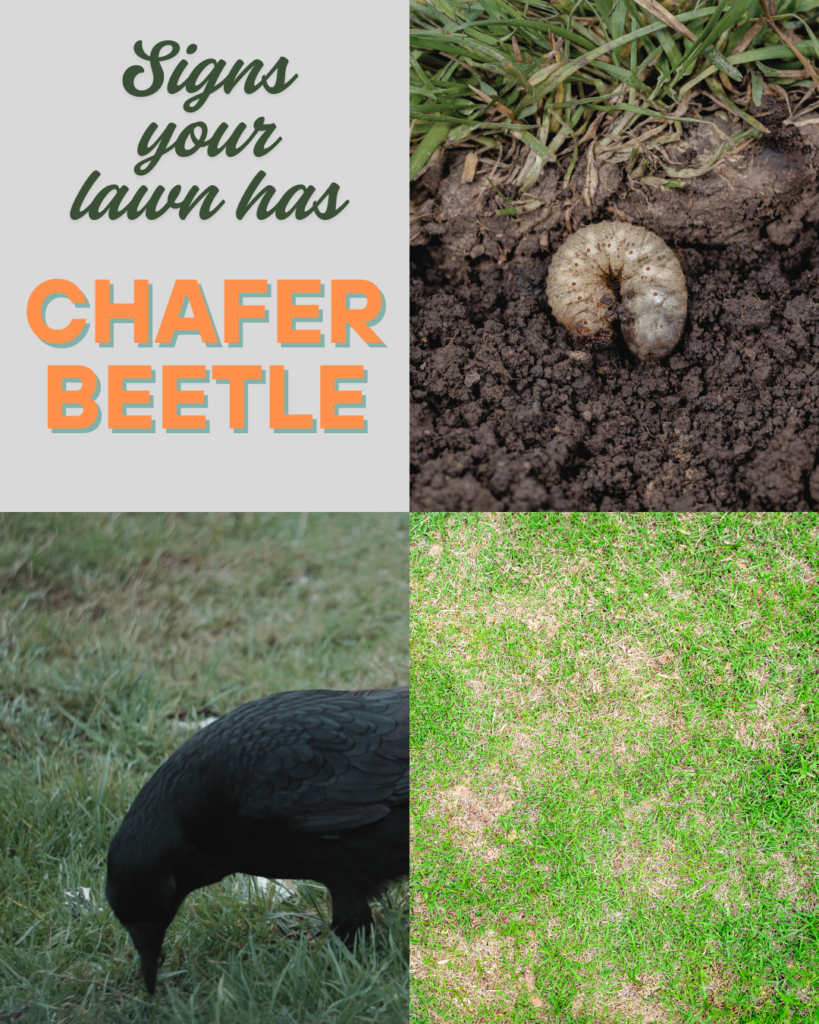
If you've stepped outside on a fall morning to find your lawn torn apart overnight — chunks of turf ripped up, soil scattered across the yard — you already know the frustration. You're not alone, and you're not dealing with a random act of nature. You're dealing with the European chafer beetle, and it has become one of the biggest lawn care challenges facing Chilliwack homeowners in recent years.
In this post we'll break down exactly what's happening, how to know if your lawn is affected, what treatments actually work, and what you can do to protect your yard for the long haul.
What Is the European Chafer Beetle?
The European chafer beetle was first introduced to BC in 2001, likely through infested turf, and has since spread steadily through Metro Vancouver and into the Fraser Valley. It's now firmly established in Chilliwack, and the problem has been growing noticeably worse.
Adult European chafer beetles are tan or brown, roughly 1.5 cm long, resembling a small June beetle. The grubs are soft, white, and C-shaped with tan-coloured heads and six prominent legs, measuring up to 2.5 cm when fully grown.
Here's the key thing to understand: the beetle itself isn't really the problem. The grubs are.
The beetle larvae eat the roots of grass, damaging and killing it in patches. But the grubs also attract animals — birds, skunks, and raccoons — who dig up the grass to eat them, often causing even more visible destruction than the grubs themselves.
The problem has gotten significant enough that the City of Chilliwack recently partnered with UFV's Agriculture Department on a research project to survey the full impact of chafer beetles in Chilliwack — with findings to be reported to council. This is a real, recognized community issue — not just something happening in your neighbour's yard.
How to Tell If You Have Chafer Beetles
The signs are usually pretty unmistakable once you know what to look for:
- Brown, Dying Patches of Lawn
Irregular brown patches that appear in late summer through fall are often the first sign. Unlike drought stress, which tends to affect the whole lawn evenly, chafer damage creates distinct dead zones where the grass roots have been severed underground.
- Turf That Pulls Up Like a Carpet
This is the telltale test. If you grab a brown patch of lawn and it peels back easily with little resistance — like lifting a loose rug — the roots have been eaten away. Healthy grass resists pulling because its roots hold it firmly in the soil.
- Spongy Lawn Underfoot
Heavy infestations may cause your grass to feel spongy underfoot due to grubs tunnelling just below the surface.
- Wildlife Digging Up Your Lawn
Crows, ravens, skunks, and raccoons have an incredible ability to smell grubs underground. If your turf has been shredded by crows or raccoons, it's a strong signal that chafer grubs are present — and the wildlife digging often causes even more visible damage than the grubs themselves.
- Adult Beetles Swarming at Dusk in June
Adult chafer beetles only emerge for one to two weeks in June to mate and lay eggs. You may find them flying clumsily around tall objects such as buildings or trees at dusk. If you notice a swarm of small brown beetles around your porch light or tree canopy on June evenings, that's your early warning sign for what's coming in fall.
How to Confirm It: The Sod Test
To check for grubs, cut three sides of a 30 by 30 cm piece of sod to a depth of 5 cm and fold it back to count the grubs. Finding 6 or more grubs in a single square is generally considered a damaging level of infestation.
The Chafer Beetle Life Cycle (Why Timing Matters So Much)
Understanding the life cycle is critical because treatments only work during specific windows. Here's the annual cycle in Chilliwack:
| Time of Year | What's Happening |
| Late May – June | Adult beetles emerge, swarm at dusk, mate |
| July | Eggs laid in lawn; grubs hatch late July |
| Late July – August | Young grubs near surface — prime treatment window |
| August – October | Grubs feed heavily on roots; wildlife damage begins |
| November – March | Grubs dig deep to overwinter; little can be done |
| April – May | Grubs return to surface briefly before pupating |
| June | Adults emerge and the cycle repeats |
Because this invasive species reproduces rapidly and feeds on the roots of all kinds of plants, its population can increase quickly year over year — which is why early treatment and prevention matter so much.
Can It Be Stopped? Treatment Options That Actually Work
The honest answer: you can't eliminate chafer beetles from your neighbourhood, but you absolutely can protect your own lawn with the right approach at the right time.
Option 1: Beneficial Nematodes (Most Popular for Homeowners)
Many garden centres sell the nematode Heterorhabditis bacteriophora, which feeds on chafer beetle larvae. These are microscopic, naturally occurring roundworms that you mix with water and apply to your lawn like a liquid fertilizer.
When to apply: Late July to early August, when grubs are young and close to the surface.
Tips for success:
- Water your lawn thoroughly before and after application
- Apply in the evening — nematodes are sensitive to UV light
- Keep the soil moist for 2–3 weeks after application
- Soil temperature must be above 15°C for nematodes to be effective
Results vary, but many Chilliwack homeowners report significant improvement with consistent annual applications.
Option 2: Btg — Biological Larvicide
A microbial larvicide with the active ingredient Bacillus thuringiensis subsp. galleriae (Btg) is now registered in Canada and kills larvae when they consume it. It's available in domestic formulations at some garden centres, or in commercial formulations applied by a professional.
This is a newer option that's gaining traction and can be an effective complement to nematodes.
Option 3: Professional Treatment
For severe or recurring infestations, a professional application gives you the best results. Licensed applicators have access to commercial-grade biological treatments and can time applications precisely. If your lawn has been significantly damaged, a professional can also assess whether renovation — not just treatment — is needed.
Important note for Chilliwack residents: Always check with the City of Chilliwack about current pesticide bylaws before applying any chemical treatment. The City has guidelines on approved products, and some chemical options permitted elsewhere may have local restrictions.
What Doesn't Work
- Treating in fall or winter when grubs are deep in the soil
- Applying nematodes to dry or cold soil
- Reseeding before grubs have finished feeding in spring
- Hoping the problem resolves itself — it won't
Long-Term Solutions: Building a Lawn That Resists Chafer Damage
Treatment is important, but prevention and resilience are the real long-game strategies. Here's what works over time:
Mow Higher
Mowing your grass longer — around 6 to 9 cm — makes it harder for female beetles to lay eggs, so they're more likely to move on to a shorter lawn nearby. Longer grass is also more drought-tolerant.
Keep Your Lawn Healthy and Well-Fed
A thick, healthy lawn with deep roots is significantly more resilient to grub damage than a thin, stressed one. Regular fertilizing, aeration, and proper watering create a lawn that can tolerate some grub activity without dying off.
Introduce Micro-Clover
Adding even 5% micro-clover, moss, or creeping thyme into your lawn creates a heavier root mass, making it harder for grubs to cause damage. Micro-clover is increasingly popular in the Fraser Valley for this reason — it also fixes nitrogen naturally, reducing your fertilizer needs.
Don't Move Infested Soil
Do not remove soil from infested areas, as chafer beetles can be spread to new areas through movement of infested soil. This is how the beetle has spread so rapidly across the region — always source sod and topsoil from reputable suppliers.
Consider Partial Lawn Alternatives
In areas where grass has repeatedly failed — particularly shady spots or high-traffic zones — it may be worth converting to ground covers, garden beds, or hardscaping. These areas eliminate the habitat chafer beetles need to lay eggs and reduces the overall turf footprint you need to protect.
Treat Annually
Chafer beetles don't go away. An annual nematode application in late July, combined with good lawn maintenance practices, is the most effective long-term strategy for keeping populations at manageable levels on your property.
Should You Repair or Renovate Your Lawn?
If the damage is extensive, patching may not be enough. Here's a simple guide:
- Less than 30% damaged — overseed affected areas in September after aeration; treat with nematodes the following July
- 30–60% damaged — consider a partial renovation: dethatch, aerate, overseed heavily, treat in summer
- Over 60% damaged — full lawn renovation is likely the most cost-effective path; strip and reseed or re-sod after treating
The best time to repair chafer damage is September — the combination of warm soil, cool nights, and returning Fraser Valley rainfall gives new seed the best possible start.
We Can Help
Dealing with chafer beetles is frustrating, but you don't have to figure it out alone. At Valley Outdoors, we assess chafer damage, help you develop a treatment and recovery plan, and can handle everything from applications to full lawn renovations.
If your lawn has taken a hit this past year, September is coming — and that's your window to get ahead of it.
If you want to replace the lawn completely, going grassless can be a beautiful option that has many benefits, besides being rid of the pesky chafer beetle. Artificial turf, bark nuggets, round rock, and other garden options can rid your yard of the beetles for good!
 Call us at 604.819.8360
 Proudly serving Chilliwack, Sardis, Promontory, Vedder, and surrounding areas
Book a free consultation today... Take the next step